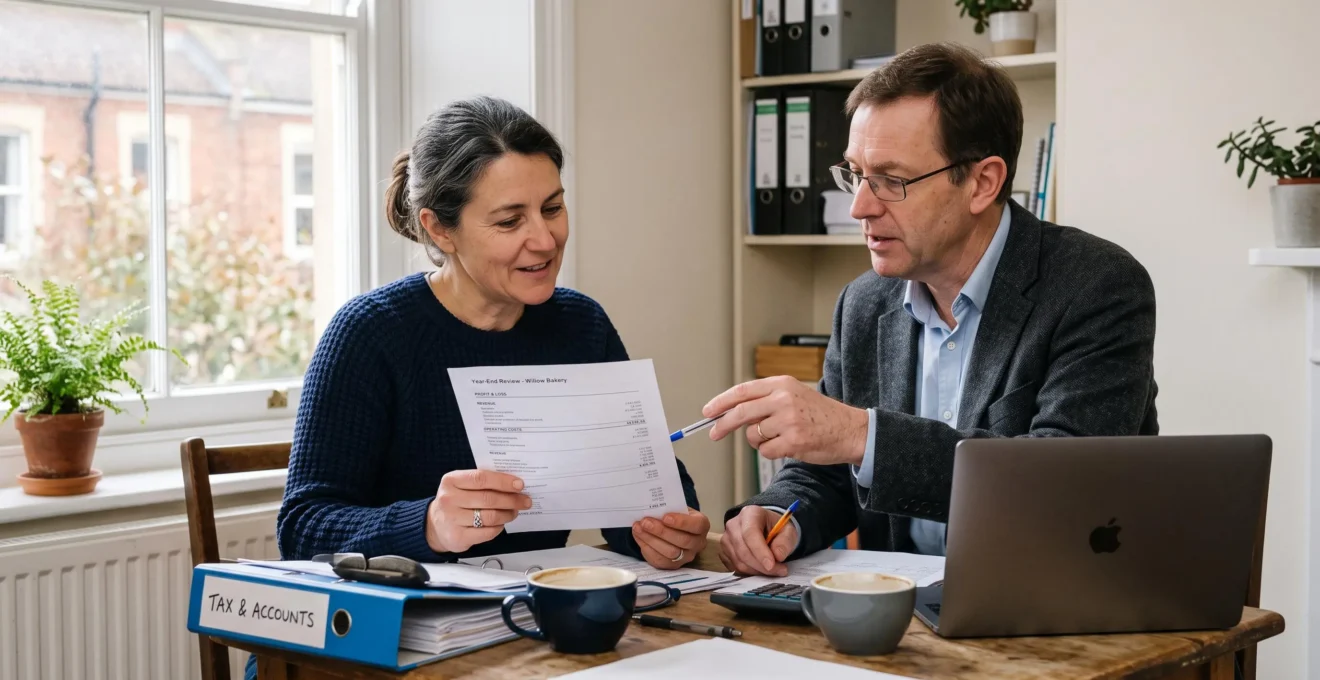
UK business owners should look for accountancy qualifications backed by recognised professional bodies, relevant practical experience and appropriate professional indemnity insurance. Credentials such as ACA, CA, ACCA, CIMA and AAT indicate different areas of training and expertise, making it important to understand what each qualification offers before appointing an accounting professional.
Unlike specific professional designations, the general title of accountant is not restricted to individuals with recognised accountancy qualifications. A professional website, extensive client list or competitive fee does not necessarily establish technical competence or professional accountability.
The appropriate level of expertise depends on the business’s financial complexity, reporting obligations and future plans. A licensed bookkeeper may provide suitable support for routine financial administration, while a qualified accountant with relevant specialist experience may be better suited to complex taxation, financial planning or business restructuring. Checking professional membership, permitted services and engagement terms helps business owners distinguish between these options without paying for expertise they do not require.
What UK business owners should know about accountancy qualifications
- Recognised professional qualifications provide evidence of training, ethical standards and professional accountability, but do not automatically establish competence in every accounting service.
- Verify professional membership, practising status, insurance and any specialist authorisations before appointing an accountant.
- Match the professional’s expertise to the complexity of the business rather than choosing solely on qualifications or fees.
- Agree responsibilities, communication arrangements and service charges in writing before work begins.
- Why Do Accountancy Qualifications Matter When Choosing Financial Support?
- How Can You Check an Accountant’s Professional Status in the UK?
- Qualified Accountant or Bookkeeper: Which Support Does Your Business Need?
- Which Accounting Credentials Should Businesses Verify Before Hiring?
- When Does a Business Need More Than Basic Accounting Support?
- How Can You Assess an Accountant Before Agreeing to Work Together?
- Bookkeeper or Accountant: Which Does a Small Business Need First?
- How Can a UK Business Choose a Chartered Accountant That Fits Its Needs?
Why Do Accountancy Qualifications Matter When Choosing Financial Support?
Accountancy qualifications matter because they provide evidence that a professional has completed relevant training and is subject to established professional standards. In the UK, anyone can generally describe themselves as an accountant, whereas recognised chartered designations are governed by professional bodies. Choosing an appropriately qualified practitioner can therefore offer additional safeguards, accountability and access to formal complaints procedures.
The distinction is particularly important when an accountant prepares VAT returns, Corporation Tax calculations or Self Assessment returns. Incorrect submissions can result in additional tax liabilities, interest or penalties, depending on the circumstances. Appointing an accountant does not transfer the business owner’s underlying responsibility for tax compliance.
Even if you use an agent, the figures on your tax return are your responsibility.
Professional membership provides safeguards that may not be immediately apparent during a consultation:
- Ethical standards: requirements governing professional competence, integrity, confidentiality and conduct.
- Continuing professional development: obligations to maintain and update relevant technical knowledge.
- Professional indemnity insurance: protection against certain financial claims, subject to the practitioner’s insurance arrangements and applicable professional requirements.
- Disciplinary procedures: an established route for raising concerns about a member’s professional conduct.
An accountant without recognised professional membership may nevertheless possess considerable experience. However, clients may lack access to an equivalent professional complaints mechanism if problems arise. Insurance cover and contractual remedies must also be assessed independently rather than assumed.
Qualifications do not guarantee error-free work, prevent every HMRC penalty or ensure compensation following a complaint. Their practical value lies in establishing a framework against which professional competence and conduct can be assessed.
These safeguards become meaningful only when the accountant’s claimed qualifications, membership and practising arrangements can be independently verified.
How Can You Check an Accountant’s Professional Status in the UK?
UK business owners can check an accountant’s professional status by identifying the exact qualification claimed, consulting the relevant professional body’s public directory or verification service, and requesting evidence of appropriate insurance and practising status. These checks should establish whether the individual is currently recognised by the organisation and whether any necessary permissions cover the proposed services.
Ask the accountant for their full professional name, membership number and professional body. Relevant UK accountancy organisations include:
- Institute of Chartered Accountants in England and Wales (ICAEW).
- Institute of Chartered Accountants of Scotland (ICAS).
- Association of Chartered Certified Accountants (ACCA).
- Chartered Institute of Management Accountants (CIMA).
- Chartered Institute of Public Finance and Accountancy (CIPFA).
- Association of Accounting Technicians (AAT).
Use the organisation’s official directory or membership verification process rather than relying exclusively on certificates, website badges or email signatures. Where a public listing is unavailable or unclear, contact the professional body directly. Verify the individual responsible for the work as well as the firm’s status where relevant.
A vague description such as certified accountant, without an identifiable awarding organisation, warrants further investigation. Other warning signs include reluctance to disclose membership details, an inability to demonstrate appropriate insurance or unsupported claims about regulated services.
Where the practice operates as a limited company or limited liability partnership, its registered details can also be checked through Companies House. Sole practitioners operating as sole traders may not have a Companies House registration. Company registration alone is not evidence of professional competence.
A straightforward three-step verification process can normally be started in less than an hour, although confirmation from a professional body or practitioner may take longer:
- Request the precise professional designation, membership number and details of the responsible accountant.
- Consult the relevant professional register or verification service and check practising permissions where applicable.
- Request evidence of professional indemnity insurance and a proposed engagement letter describing the services offered.
Once the professional’s credentials have been established, the next consideration is whether their permitted services and practical expertise correspond to the business’s actual accounting requirements.
Qualified Accountant or Bookkeeper: Which Support Does Your Business Need?
A bookkeeper is generally suited to maintaining financial records, processing transactions and reconciling accounts, while a qualified accountant can provide broader support with financial statements, tax compliance and business advice. The distinction is not absolute: professionally licensed bookkeepers may offer additional services, and many businesses benefit from combining bookkeeping and accounting expertise rather than choosing one exclusively.
Bookkeeping establishes the financial information that an accountant uses to prepare reports, calculate tax liabilities and advise on business decisions. Accurate sales records, supplier invoices and bank reconciliations are therefore valuable regardless of the level of accounting support required.
The scope of bookkeeping can extend beyond routine data entry. Under AAT’s licensing and permitted services framework, licensed practitioners may provide specific approved services according to their competence and individual licence.
5 vs 18
AAT Licensed Bookkeepers can apply to provide up to five service categories, while the AAT Licensed Accountant framework offers 18 categories. Individual practitioners may provide only the services approved under their own licence.
Association of Accounting Technicians (AAT), AAT licences and services.
The following comparison illustrates how different financial requirements can influence the appropriate choice of professional.
| Business requirement | Bookkeeping support | Accounting support |
|---|---|---|
| Routine transactions | Recording income, expenditure and bank movements | Reviewing classifications and financial accuracy |
| VAT and payroll | Routine processing within the practitioner’s competence and permissions | Complex treatments, compliance reviews and specialist advice |
| Annual reporting | Preparing reconciled financial records and certain accounts where permitted | Preparing financial statements and associated tax calculations |
| Business growth | Maintaining accurate and timely transaction data | Forecasting, financial planning and funding advice |
Business owners should consider transaction volumes, VAT arrangements, payroll requirements, the number of trading entities and anticipated growth. A business with straightforward transactions may require regular bookkeeping and occasional accounting reviews. Another with multiple companies or complex tax arrangements may need more frequent specialist involvement.
Professionally recognised bookkeepers, including appropriately qualified AAT or Institute of Certified Bookkeepers (ICB) practitioners, should not be dismissed solely because they do not hold chartered accountant designations.
The most appropriate arrangement often combines complementary skills, provided each practitioner understands their responsibilities and the boundaries of their professional expertise.
Which Accounting Credentials Should Businesses Verify Before Hiring?
Businesses should verify recognised accountancy qualifications, current professional membership, relevant practising permissions and experience in the services required. Common UK credentials include ACA, CA, ACCA, CIMA and AAT qualifications. Each represents a different professional training pathway, and none should be treated as automatic evidence that its holder is authorised or experienced in every accounting activity.
Understanding the emphasis of each qualification helps business owners assess whether a practitioner’s background matches their financial priorities. The following designations are commonly encountered when comparing UK accounting professionals.
| Credential | Professional body | Typical areas of expertise |
|---|---|---|
| ACA / FCA | ICAEW | Financial reporting, taxation, assurance and business advisory services |
| CA | ICAS | Financial accounting, reporting, taxation and business finance |
| ACCA / FCCA | ACCA | Financial accounting, taxation, financial management and advisory services |
| ACMA / FCMA / CGMA | CIMA professional qualification and associated designations | Management accounting, performance analysis, budgeting and strategic finance |
| CPFA | CIPFA | Public financial management, governance and financial accountability |
| AATQB / MAAT / FMAAT | AAT | Bookkeeping, accounting operations and additional services according to competence and licensing |
These categories describe typical professional backgrounds rather than exclusive areas of practice. An accountant with a management accounting qualification may have substantial tax experience, while a chartered accountant may specialise in internal financial management rather than preparing external clients’ tax returns.
Business owners should therefore investigate three additional dimensions of professional suitability:
- Relevant experience: familiarity with comparable businesses, industry-specific transactions, reporting requirements and common tax issues.
- Specialist authorisations: appropriate permissions for regulated activities such as statutory audit or acting as an insolvency practitioner, where required.
- Digital competence: experience with the business’s accounting software, digital record-keeping and applicable Making Tax Digital requirements.
Holding a chartered qualification does not automatically grant statutory audit or insolvency authorisation. Similarly, an AAT qualification or membership designation does not establish permission to provide every service available under the organisation’s licensing framework.
For digital accounting, ask whether the practitioner can work with the existing software, maintain reliable transaction records and support the Making Tax Digital obligations applicable to the business. Compatibility should be demonstrated rather than assumed from professional qualifications.
A qualification becomes particularly valuable when its underlying expertise corresponds to an emerging financial challenge that routine accounting arrangements cannot adequately address.
When Does a Business Need More Than Basic Accounting Support?
A business may need more than basic accounting support when its tax obligations, ownership structure, financing arrangements or commercial activities become increasingly complex. VAT registration, employing staff, incorporation, international trading and preparing for investment or sale can all justify reviewing existing arrangements. The need for specialist expertise depends more on the nature of these changes than on turnover alone.
Routine bookkeeping and annual tax preparation may remain appropriate for a business with predictable activities. However, significant changes can introduce financial decisions that require advice before transactions occur, rather than retrospective reporting after the event.
Common circumstances that warrant reassessing accounting support include:
- Approaching or exceeding the applicable VAT registration threshold, particularly where transactions involve different VAT treatments.
- Employing staff for the first time and establishing payroll processes and associated reporting arrangements.
- Incorporating a business, changing its ownership structure or establishing additional companies.
- Seeking external investment, business loans or other forms of commercial finance.
- Entering overseas markets or introducing cross-border transactions.
- Preparing for a business sale, acquisition or restructuring involving financial due diligence.
These developments do not automatically create a legal requirement to appoint a chartered accountant. They indicate circumstances in which additional technical or advisory competence may be commercially appropriate.
Hypothetical example: why financial complexity matters more than turnover
Consider a small software company operating through two legal entities and seeking investment from external shareholders. Despite having relatively few monthly transactions, it may need management accounts, intercompany reconciliations, financial forecasts and support with investor due diligence.
By comparison, an established sole trader with higher turnover but straightforward domestic transactions may require less extensive advisory support. The difference lies in ownership, financial reporting and decision-making requirements rather than business size alone.
ICAEW identifies financing, business expansion and staffing among the areas in which accounting professionals can provide additional assistance. These services should be assessed against the practitioner’s actual experience, not assumed from their designation.
Retaining an unsuitable provider during a sensitive transaction can create avoidable costs if financial records require correction, specialist advice must be obtained urgently or due diligence information is incomplete. Changing accountants during an active transaction can also complicate access to historical records and explanations.
The decision to obtain additional expertise should be followed by a practical assessment of the people, processes and commercial terms behind the proposed service.
How Can You Assess an Accountant Before Agreeing to Work Together?
Business owners should assess an accountant by examining relevant client experience, the proposed service delivery process, communication arrangements and the transparency of fees. An initial consultation should establish who will undertake and review the work, how deadlines are managed and what the business must provide. A written engagement letter should confirm these arrangements before either party commits.
According to CCAB’s advice on choosing an accountant, businesses should consider professional competence, comparable client experience, service arrangements and the basis on which fees are calculated.
During an introductory meeting, ask questions that encourage the accountant to describe their actual working practices:
- Who will prepare the accounts, review technical matters and act as the main point of contact?
- What experience does the practice have with businesses of a similar size and in the same industry?
- How are HMRC deadlines monitored, and when must clients supply their financial records?
- Which communication channels are available, and how are urgent enquiries handled?
- What happens when a matter falls outside the assigned accountant’s expertise?
Specific answers about responsibilities, review arrangements and escalation procedures are more informative than broad assurances of personal service. Ask whether references from comparable clients or anonymised examples of financial reports can be provided, subject to confidentiality requirements.
Fee comparisons should distinguish between fixed-price services, hourly billing and additional charges. Annual accounts preparation may be covered by an agreed fee while payroll, VAT returns, bookkeeping corrections or correspondence concerning HMRC enquiries may be billed separately.
Request an explanation of how unexpected work is authorised and charged. An apparently inexpensive package may not be directly comparable with a more comprehensive service that includes regular reviews and technical support.
Five checks to complete before appointing an accountant
- Verify the accountant’s professional membership and relevant practising permissions, retaining a dated register entry or written confirmation.
- Request evidence of professional indemnity insurance and retain a copy showing the insured practice and applicable coverage period.
- Confirm relevant industry experience and service quality through a comparable client reference or anonymised example of a financial report.
- Obtain a written quotation identifying included services, excluded work, billing arrangements and potential additional charges.
- Review the proposed engagement letter and obtain a final agreed version identifying responsibilities, communication arrangements and service boundaries before signing.
The engagement letter should also clarify what happens if information is supplied late, additional services become necessary or the relationship ends. These details help distinguish an accountant’s operational responsibilities from the client’s continuing obligations.
For businesses establishing their financial processes for the first time, these assessments should also determine how routine bookkeeping and higher-level accounting responsibilities will be divided.
Bookkeeper or Accountant: Which Does a Small Business Need First?
A small business generally benefits from establishing reliable bookkeeping processes from the outset, supported by a suitably qualified accountant when tax, reporting or business advisory requirements arise. A bookkeeper or properly configured accounting system can maintain accurate financial records, while early accounting advice can help establish appropriate tax arrangements, reporting processes and responsibilities before the first filing deadlines.
The sequence depends partly on the business structure. A straightforward sole trader may be able to maintain records independently and obtain periodic professional assistance. A newly incorporated company with external shareholders or more complex financial arrangements may benefit from accounting advice before its routine bookkeeping processes are established.
There is no general requirement for every small business to appoint a qualified accountant during its first financial year. Nevertheless, professional assistance may be appropriate when the owner lacks the expertise or time to prepare accurate accounts and tax submissions.
ICAEW’s small business guide to hiring an accountant distinguishes routine record-keeping from broader accounting services and identifies circumstances in which appointing both types of professional can be appropriate.
The effectiveness of this arrangement depends on how information passes between the two practitioners:
- Both professionals should work with compatible accounting software and an agreed chart of accounts.
- The bookkeeper should maintain supporting documents, reconcile transactions and identify unresolved entries.
- The accountant should communicate any required adjustments, reporting classifications or changes to financial processes.
- Responsibility for VAT, payroll, tax returns and annual accounts should be allocated explicitly.
A practical arrangement for a small business may involve an outsourced or part-time bookkeeper maintaining records throughout the year, with a qualified accountant conducting periodic reviews and handling agreed year-end obligations. More frequent reviews may be appropriate when financial complexity or commercial risks increase.
Reliable bookkeeping can reduce the amount of corrective work required during accounts preparation, potentially limiting additional professional charges. The actual financial benefit depends on record quality, service arrangements and the accountant’s charging structure.
Once this division of responsibilities is understood, the business can compare accounting practices against a clearer description of its immediate requirements and future plans.
Key considerations before choosing an accounting practice
- Define the financial work that needs professional oversight before requesting quotations, including any specialist or regulated activities.
- Consider whether the practice can accommodate future changes in ownership, staffing or financial complexity without unnecessary disruption.
- Assess how information, responsibilities and accounting software will be transferred if the business changes providers.
How Can a UK Business Choose a Chartered Accountant That Fits Its Needs?
A UK business can choose a suitable chartered accountant by comparing verified professional credentials, sector experience, service capacity, communication practices and overall cost. Shortlisting practices through recognised professional bodies and conducting comparable consultations helps establish whether each firm can meet current requirements, accommodate future financial complexity and provide an appropriate level of access to experienced accounting professionals.
Start by identifying practices that regularly serve businesses with comparable financial requirements. A firm specialising in large corporate groups may have substantial technical resources but offer a service structure that is less suitable for a micro-business. Conversely, a small general practice may require external specialist support when dealing with complex transactions.
Location should be assessed alongside digital accessibility. A remote accounting relationship may be suitable when documents can be exchanged securely, consultations are readily available and responsibilities are clearly established. Local availability may be preferable when the business requires regular in-person discussions.
A structured selection process can begin with three prospective practices identified through professional directories, such as those maintained by ICAEW, ICAS or ACCA. Provide each firm with the same description of the business and its requirements to obtain comparable proposals.
The following illustrative assessment framework can help distinguish essential requirements from preferences. The suggested weightings are qualitative rather than prescribed professional standards and can be adapted to the business.
| Selection criterion | Suggested weighting | Evidence to examine |
|---|---|---|
| Qualifications and professional permissions | Essential | Verified membership, insurance and relevant practising authorisations |
| Sector and technical experience | High | Comparable clients, relevant specialisms and practical knowledge |
| Availability and responsiveness | High | Named contacts, review arrangements and communication commitments |
| Fees and service coverage | High | Written quotations, inclusions, exclusions and additional charges |
| Digital accounting capability | Medium to high | Software compatibility, digital reporting and data transfer arrangements |
| Location and meeting preferences | Dependent on business needs | Remote accessibility and availability of in-person consultations |
When replacing an existing accountant, agree a handover process before terminating the relationship. Identify outstanding submissions, obtain copies of completed accounts and tax returns, and establish how accounting records, reconciliations and relevant supporting information will be transferred.
Documents belonging to the client should be distinguished from the former accountant’s internal working papers. Access rights, outstanding fees and contractual arrangements may affect which documents must be released. The incoming accountant can also coordinate professional enquiries with the previous provider, subject to appropriate client authorisation.
Where practical, schedule the transition after completing a significant reporting cycle and sufficiently ahead of the next HMRC deadline. If an urgent change is necessary, explicitly allocate responsibility for unfinished work and impending submissions.
Prepare a written description of the accounting services required, obtain comparable proposals from suitable practices and assess each against the same criteria. Appoint the professional whose verified expertise, service arrangements and agreed responsibilities best correspond to the business’s financial needs.
What is the difference between an accountancy qualification and professional membership?
An accountancy qualification demonstrates completion of a particular professional training or assessment pathway. Professional membership establishes an individual’s relationship with the relevant professional body and may involve ongoing ethical, educational and disciplinary obligations. Business owners should verify current membership separately from historical qualifications, particularly when appointing someone to provide services requiring practising permissions.
Is a chartered accountant automatically qualified to provide specialist tax advice?
No. Chartered accountancy qualifications provide a recognised professional foundation, but specialist tax advice requires relevant technical knowledge and practical experience. For complex taxation matters, businesses should establish whether the accountant regularly handles comparable issues or has access to an appropriately experienced tax specialist.
Can an accountant prepare annual accounts without being authorised to conduct statutory audits?
Yes. Preparing annual accounts and conducting a statutory audit are distinct activities. Statutory audit requires specific authorisation that is not automatically granted by an accountancy qualification. A business that requires an audit should verify the relevant auditor’s authorisation separately from the credentials of the professional preparing its financial statements.
Does professional indemnity insurance guarantee compensation if an accountant makes a mistake?
No. Professional indemnity insurance may cover certain claims arising from professional errors or negligence, but compensation depends on the circumstances, legal liability and applicable policy terms. Businesses should verify that appropriate insurance is in place without treating it as a guarantee against every financial loss or tax penalty.
Can junior accounting staff work on business accounts under the supervision of a qualified accountant?
Yes. Accounting practices may allocate routine preparation work to junior staff while qualified or suitably experienced professionals undertake reviews and handle technical matters. Business owners should establish who supervises the work, who takes responsibility for its quality and how specialist questions are escalated. Delegation is not inherently problematic when appropriate oversight is provided.